
You Aren’t Lazy, It’s \"Double Winter\": Why Your Period Hits Harder in Cold Weather
If you’ve been feeling an overwhelming urge to cancel all your plans, crawl under a weighted blanket, and sleep until spring, you aren't lazy—you’re likely experiencing a physiological event known as "Double Winter."
In the world of cycle syncing, we often use seasons to describe the four phases of your menstrual cycle. The menstrual phase (the days you are bleeding) is your Inner Winter - a time of hormonal hibernation, low energy, and turning inward.
But what happens when your Inner Winter coincides with the Outer Winter (the actual cold, dark season outside)? You get Double Winter - a biological "perfect storm" that demands deep rest.
Here is the science of why you feel this way and, more importantly, how to support your body without fighting it.
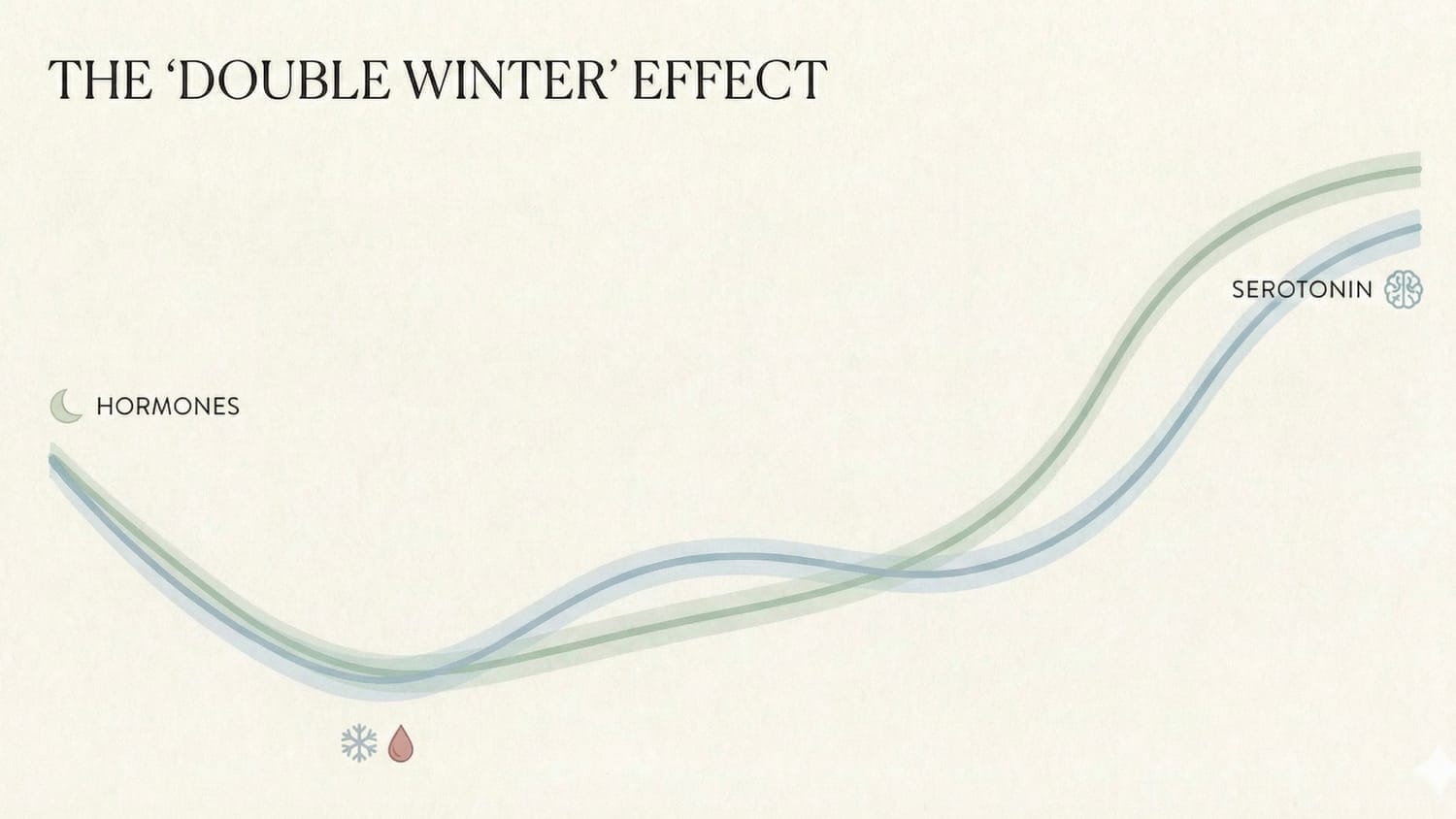
The "Double Dip" in Hormones
During your menstrual phase, your reproductive hormones - estrogen and progesterone - drop to their lowest levels. This signals your body to conserve energy.
Simultaneously, the external winter season messes with your brain chemistry. The lack of sunlight causes a drop in serotonin (the "happy hormone" that helps regulate mood) and an increase in melatonin (the hormone that makes you sleepy).
The Result: When you bleed during the dark winter months, you are navigating low estrogen, low progesterone, low serotonin, and high melatonin all at once. Your body isn't "giving up" on you; it is aggressively signaling you to hibernate.
Why Cramps Feel Worse in January?
Have you noticed your period pain is sharper when it’s cold outside? You aren't imagining it. There is a physiological mechanism behind "Winter Period Pain."
When temperatures drop, your body naturally reacts with vasoconstriction—the narrowing of blood vessels to preserve core body heat. This constriction reduces blood flow to the uterus. When blood flow is restricted, the uterine muscles have to contract harder to shed the lining, which can significantly intensify cramps.
Furthermore, lower levels of Vitamin D (common in winter due to lack of sun) are linked to higher levels of inflammation and more severe PMS symptoms.

The "Cold Uterus" Theory
In Traditional Chinese Medicine, there is a concept called "Cold in the Uterus". The idea is that cold energy causes stagnation, leading to slow, painful periods, clots, and deep fatigue.
Even if you look at it through a Western lens, the logic holds: cold tightens tissues, while heat expands and relaxes them. If your environment is freezing and you are drinking iced coffee, you are essentially "freezing" your digestion and uterine muscles, making it harder for your body to do its job.
Your Double Winter Survival Kit
Instead of trying to "power through" with high-intensity cardio and cold salads, lean into the season with these science-backed shifts:
1. Thermal Eating (No More Cold Smoothies)
Your digestion is naturally weaker in winter. Stop forcing your body to expend energy heating up cold food.
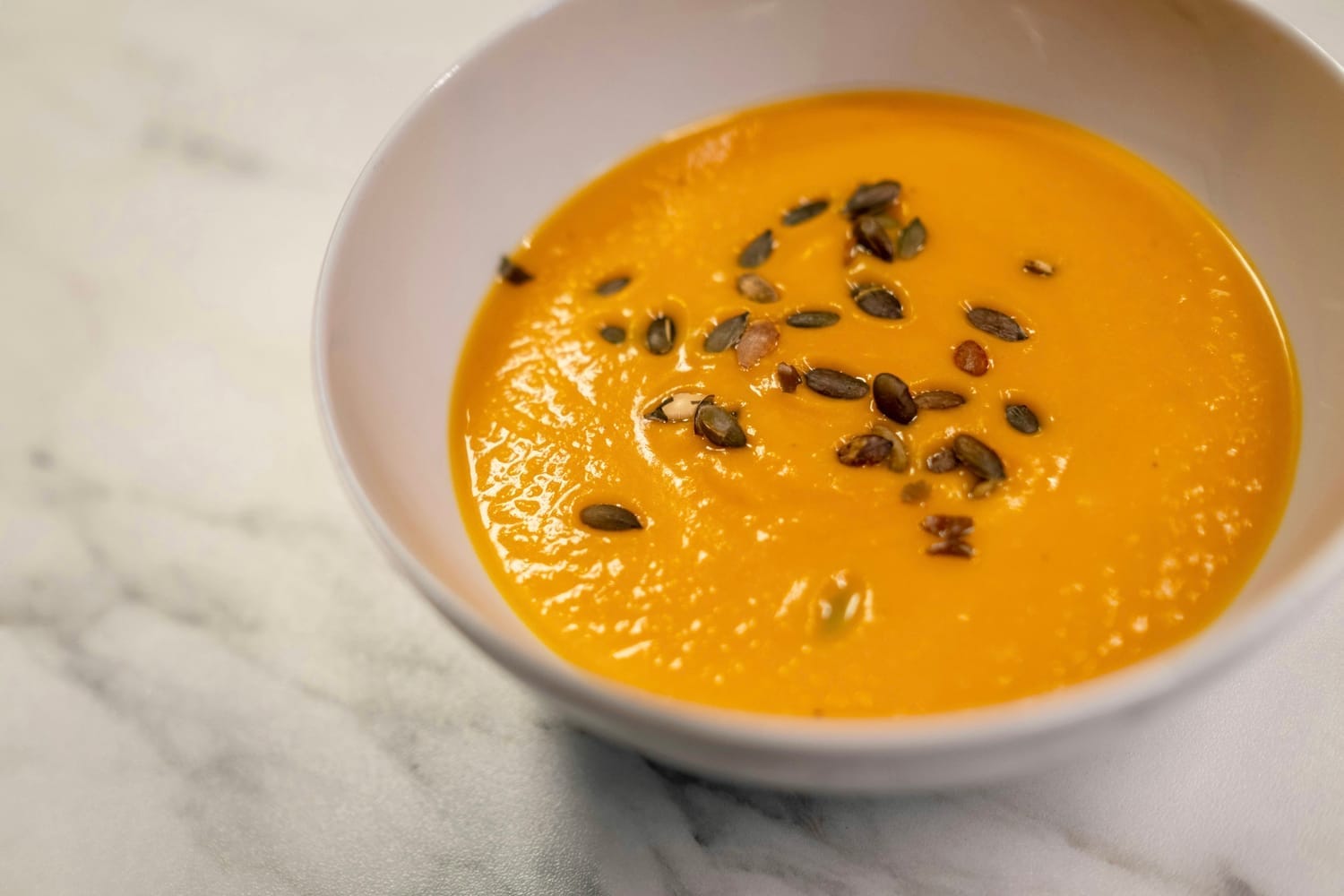
Swap: Cold salads for warm, cooked root vegetables (sweet potatoes, carrots) and soups.
Sip: Warm ginger tea. Ginger is a vasodilator, meaning it opens up blood vessels and improves circulation to the uterus, counteracting that winter vasoconstriction.

2. The "Kidney Warming" Protocol
In holistic health, winter is associated with the kidneys, which are considered the batteries of your energy levels.
Keep your feet warm: There is a direct meridian connection between your feet and your uterus. If your feet are cold, your uterus is cold. Wear the fuzzy socks.
Use a heating pad: Apply heat to your lower back (kidney area) and lower belly to keep blood flowing and prevent stagnation.
3. Adjust Your Movement
This is not the week for a HIIT class. High-intensity training releases cortisol, and if your body is already stressed by the cold and menstruation, you risk burnout.
Do: Gentle walking, Yin Yoga, or stretching. These movements keep lymph fluid moving without spiking stress hormones.
The Takeaway
If you are feeling "Double Winter," stop feeling guilty about your lack of productivity. Your biology is responding exactly as it evolved to: by slowing down to survive the cold. Wrap up, eat warm food, and let your body rest. Spring will be here soon enough.
Created with © systeme.io